Tuesday, May 30, 2006

“Social Justice” is a Misnomer: Consider “Social Mercy” Instead


Those who dedicate their lives to certain social and political causes often refer to their genre of work as “social justice.” Especially for those who work on behalf of the homeless, immigrants, refugees, and the general down-and-out, social justice has become a catch phrase for various initiatives that often involves calls for redistribution of wealth, broad government programs, and a minimum if not living wage. “Social justice”, as a stream of political thought, seems to have picked up steam in the past decade or so (especially during the Bush administration) as many on the left feared “draconian” cuts to the budget were on the way. It turned out to be quite the contrary. But who’s counting?

When the most recent massive federal budget was passed by a Republican congress, mainline church denominations called the budget “immoral” because of its “cuts” to certain social programs. (I also agree the budget was immoral, but because the lack of substantive cuts allow dehumanizing dependency on the welfare state to persist.) The language goes something as follows: “By passing this immoral budget, Congress has made it clear that social justice is not a priority.” Or, “President Bush, who once touted ‘compassionate conservatism,’ has proved himself to be opposed to serious social justice fiscal policy.” Or some such sentiment. I won’t go into all of the reasons I think these sorts of statements are wrong, but I will start by saying that the word “justice” is poorly understood. And for the record, government clearly has a role in providing for the welfare of those who cannot provide for themselves. The question is not if, but how much.

“Social justice” in many circles means “equal outcome”. When I hear activists speak of “justice”, the ideas espoused are communistic to the core, and the speakers are interested more in guaranteeing equal distribution of wealth more than equal opportunity to earn. The etymology of “justice” never suggests, however, that equal outcome is a guarantee. To be “just” is not necessarily to be compassionate, kind, or to turn the other cheek. Being just is, by definition, an objective venture that may appear to be cold-hearted. Fairness by the rule of law is the only criteria. A judge in any courtroom is not in the compassion or forgiveness business. He (or she) is in the judgment business, which may mean he rules against a very nice man who unintentionally committed a crime as much as he rules in favor of a cold-blooded killer whose home was illegally searched. That’s justice: cold, unfeeling, legalistic.

But if justice comes to mean equal outcome, then we are in for a long haul when the shadow side of overusing this word comes to fruition: justice demands a monopoly because it acts in an objective manner. So when we attach “justice” to a cause, rightly or wrongly, we are tacitly recognizing that this call must get accomplished in the name of all that is right in the world. If “justice” calls for a welfare state, who are we to deny it? If “justice” calls for the top 5% of wage earners to foot the bill for the other 95%, who are we to say no?

Justice has a powerful voice that drowns out reason, logic, and desire. Actions must be taken, vows must be broken, change must occur in the name of justice. Justice works on a different level than our emotions, so it has the ability to call us to something higher. So when justice speaks, it carries a seemingly objective weight behind it that implies that if society doesn’t listen, it is committing a grave sin. That’s why pseudo-communists use the word: they are hanging onto an old understanding of the word that was appropriate at other times in history, but now is being perverted to tell us how unfair society is by not creating equal outcome.

So when I hear this phrase, “social justice,” I toddle between irritation at the communistic values that underpin the phrase and laughter because of the complete lack of etymological sensitivity to what “justice” actually is. At a theological level, for example, I have no doubt that God is a just god. But Christians believe that God is more than merely just; God is also merciful. Mercy is a very different concept from justice. Mercy is full of compassion; it is grace incarnate. It is looking at your neighbor as one who may not deserve help, but should receive it anyway. If we looked at our neighbor from a perspective of justice, we could find many reasons not to help them. Justice might even demand that we don’t. But hopefully, we look on others with mercy, not justice.

Mercy also only has as much power as the person doing it. Because it is voluntary, its power is limited to the person showing mercy. Mercy is hard to rally, politicize or generate votes. It’s doing the right thing for its own sake. So I advocate the phrase “social mercy” over “social justice,” because if nothing else, it is not so pompous as to assume that communism is the only way to achieve a loving society. If justice ruled our hearts more than mercy, none of us would come out alive.

A final thought on what this social mercy looks like. The father of “compassionate conservatism,” Marvin Olasky, has written extensively on this, especially in “The Tragedy of American Compassion.” In sum, mercy towards others is best achieved at a local level. It involves truly helping people by works of kindness, not merely federal money. And mercy involves an honest acknowledgement of the power of sin, instead of a steady paycheck that may enable bad behavior. I only ask that when we speak about justice, we be careful what we ask for. Justice may only be kind to us a long time from now.

Tuesday, May 23, 2006

Media, Waste and What Works

Real Clear Politics links to Lou Dolinar’s account of the rescue efforts during and after the passing of Hurricane Katrina. Along with Congress’s report evaluating the emergency response at all federal levels, I can’t help but be convinced that such a vast natural disaster shows why larger government doesn’t improve anything. FEMA collapsed under the pressure, fraud was rampant in awarding reconstruction contracts and issuing debit cards, and the Army Corps of Engineers took no responsibility in the faulty construction of the canal walls. Dolinar extensively highlights the impressive achievements of the government services that did indeed worked: the coalition of armed forces. In the whole wretched ordeal that was Katrina, the most visible glimpses of hope that I caught while watching the news coverage was the skillful and tireless efforts of coast-guard helicopters. I found interesting yet unsurprising that the media, which was eager to celebrate the efforts of police officers and fire-fighters after 9-11, seemed to give short shrift to the amazing rescues of the coast-guard. Somehow, even with tremendous competence at the local level surrounding, television cameras were more eager to broadcast scenes of chaotic disorder and misery.

The media’s myopia seems to have completely missed on the national guard’s efforts in coordinating rescue and evacuation efforts right in front of their noses at the Superdome. Dolinar’s article provides necessary details on these mostly non-reported efforts, whose success at maintaining a semblance of order helps explain how the rumors around what happened around the superdome were completely false. Beginning with the Indian Ocean tsunami a year and a half ago and then with the Pakistani earthquakes, it was clear that the armed forces could demonstrate not only that they can generally be a forced for good, but also a force that works. It is the only organization I have seen whose efficiency in managing through crises is unparalleled. After all, if you were one of the millions of unfortunate people afflicted by a civil war or an unmitigated natural disaster, which would you rather hope to have: the U.N. blue helmets or American officers?

The last institution I would ever rely on as a last resort is a bloated governmental bureaucracy. They have shown time and again how incapable they are in the face of emergencies or other tenuous situations. Whether it’s in the rebuilding of Iraqi infrastructure or the setting up of medical relief in far-flung places, organizations like USAID or the United Nations respond with near-scandalous lethargy and obscene financial profligacy. I find it difficult to recall when the contrary has ever taken place with such institutions. Even with large non-profits like the American Red Cross, I carry a sense of regret that I don’t have the option of donating directly to military efforts that are fare more potent in relieving crises. Sure I pay my taxes, but sometimes I think our armed forces have a lot more to show for their achievements in humanitarian relief than their share in government revenue. Considering the various things I pay for and support, I expect lots of waste by government that will fritter away the actual effectiveness of my monetary contribution.

But somehow I’m convinced that most taxpayers would gladly want more of their money frittered away by bureaucratic wastefulness and incompetence. After all, the general legislative response to intelligence failures such as 9-11 was to add a brand-new bureaucratic department under the guise of Homeland Security, coupled with several additional tiers of various directors of intelligence (which apparently contributed to an irresolvable inter-departmental turf battle that ousted CIA chief Porter Goss), and the massive nationalization of airport security that has failed to substantially improve passenger safety.

I’m afraid that if there was a mildly believable proposal to expand the powers of a government bureaucracy established to confront natural disasters, most voters would not hesitate to support it. All the while when there are clear examples of state-based institutions accomplishing far more with a more efficient use of resources. There’s no reason government bureaucracies could not adopt the mentality and tactics of the armed forces that enable better overall functioning. I for one would not bat an eye if our armed forces developed additional capacities that could eliminate the need for many of the government-run social and humanitarian agencies. Just cut one’s losses and ride the winning horse.

The media should not only report what fails, but also what succeeds. It maintains its critical stance to inform us why something has gone wrong. But the media should also inform us why something goes wright, so that its viewers will make more prudent decisions on how to government should spend their money. Otherwise our current disconnect between the problem and solution remains, deluding many of us to throw money at a problem with little consideration on actual effectiveness.

Monday, May 22, 2006

The “Da Vinci” Boon: Whatever Doesn’t Kill the Church Will Only Make it Stronger

For someone who fits the mold of the exact person to get irate about “The Da Vinci Code,” I find myself remarkably bored by the whole thing. As a person who loves order, who respects traditional Christian authorities, and who tends to lean on the truth as revealed throughout the ages, I am the perfect person to call for boycotts to this film. Yet, not only do I find myself unworried about it, I find the whole enterprise to be quite harmless.

That being said, I won’t support the movie, and I have encouraged others not to see it. I am a capitalist after all, and I try to put my money where my mouth is. I did read the book, so I am familiar with the arguments of the story, silly as they may be. But even if everyone I told not to see the film did, I wouldn’t feel betrayed, or even worried for several reasons. For one, from what I can tell from reviews, the book does not adapt well to the screen. The huge lumps in logic are great for reading on a rainy day; the suspension of disbelief is just easier in our imagination compared to a realization of it on film. It seems that all of a sudden, many critics realized how silly the storyline was after all once seeing it in "real life". Hence the reports of heckling. Given audience critiques are not much better, it seems many viewers agree.

Second, no amount of speculation, revision, or derision will kill the Church. I admit that “Da Vinci” and its fruits can have a harmful affect on the believer by producing seeds of doubt and mistrust in the Church. (The Church often does a good enough job of this on its own!) I recognize that when something is this culturally popular, it is easy to get swept away in its nonsense instead of wrapped up in historic wisdom. It can be a lot more comfortable for a short while, too. But “Da Vinci” is just another in a long line of heresies that traditionally have invigorated the Church and forced it to define itself over and against the culture time and time again. I might go so far as to say Dan Brown has done a certain amount of good for the Church, because this debate will help the Church define what it is.

Underlying all this is this point: the number of people who worship on Sunday morning, or even the number of people who would identify themselves as Christian is irrelevant when talking about the Church. The true Church is made up of those who believe, be it 100 people or 100 million people. (There always has been and always will be disputes about what exactly to believe, and here I’ll rely on the Apostles or Nicene Creeds.) The history of Christianity is full of moments when the wheat is separated from the chaff, and “Da Vinci” is just another moment in a long line of them that allows the Church to define itself even more loudly, and believers to stand out from the derision found in secular culture. If “Da Vinci” has a negative impact on the numbers of the faithful, it will be unfortunate, but the Church will go on.

This book and film are just another example of secular forces pushing historic Christianity to the margins, considering it antiquated and a harmful venture in mass deceit. Maybe it’s the Lutheran in me, but I see this as a net positive. Like recessions are good for economies from time to time, the Church needs to be reminded that we are not always welcome. The great mistake of the medieval Church was that it felt society should revolve around it, and made no distinctions between itself and the world. Thus, it became corrupt and has only itself to blame for Luther and all of his unintended consequences. The Church being pushed to the margins is nothing to fear from the Church’s viewpoint, because the Church will survive. It’s the world that will bear the costs.

Finally, Dan Brown is not the kryptonite, and the Church is not Superman. Rather, a better analogy might be Da Vinci’s Vitruvian Man: the Church is perfectly symmetrical, bearing the promise of life in a dead world; it has a clear center in Christ; and the Church is the intersection of the material world with the spiritual, as Da Vinci’s square and circle represent.

Thursday, May 18, 2006

Houston, We Don't Have a Problem

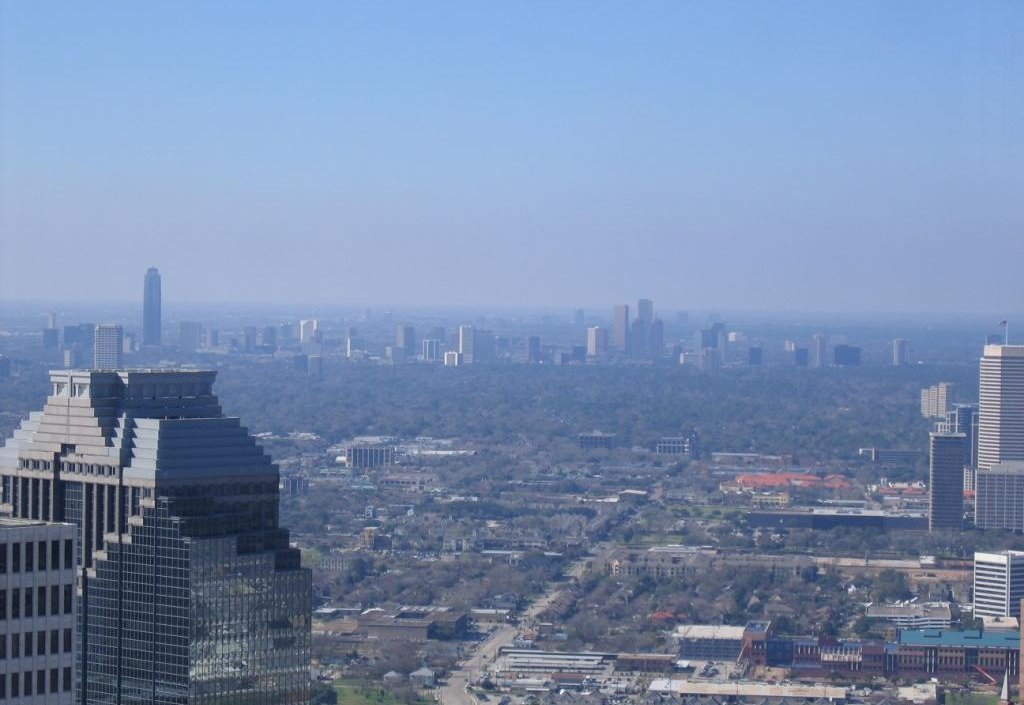
After New York, Los Angeles, and Chicago, very few people could name America’s fourth most populated city. Houston is indeed a very large city, though it fails to possess any cultural cache like other major cities. It certainly doesn’t contain a stunning architectural heritage like New York or Chicago, nor does it generate an unmistakable cultural identity like Los Angeles. Houston thrives on unglamorous industries like energy, medicine and its port. It is relatively spread out, like most major cities in the South and West, with leafy suburban neighborhoods appearing not far from the downtown area itself. In addition, the roadways are extensive, at times appearing redundant with ramps to highway, toll ways and everything in between. Houston has a road budget equal to the larger states in the U.S. It is definitely not nearly as pedestrian friendly as many Northeastern cities.

What makes Houston unique is the fact there is next to no zoning. This lends an urban landscape of seemingly random towers intermingled with small apartment blocks, sprawling mansions, and working class cottages in one big jumble. It is possible to have the shadow of a thirty-story tower over your private back yard. It also contributes to an initial sense of confusion to newcomers, not knowing which cluster of towers is downtown, since its Medical district and swank up-town at the outskirts of the city feature impressive high-rises of their own. And yet, as soon as you can identify where downtown is, navigating oneself in the Houston is quite easy since tall landmarks that dot the city’s vast expanse are visible from any street several miles away. For example, if you spot a twin set of towers that resemble big syringes, then that marks the Medical City (which is undoubtedly the most impressive self-contained medical complex in the world). If you see Philip Johnson’s lone sixty-story crystalline tower with a revolving spotlight (at night), then you have located the Galleria district, with its extensive shopping mall surrounded by offices and hotels, along with high end condominiums for the city’s young urban professionals. Houston’s central business district is punctuated by Philip Johnson’s post-modern design experiments, sheathed in elegant curtain wall glass. (actually, Houston was truly the great architect’s little playground, as his designs large and small are everywhere…)

My home city of Dallas is similar to its bigger brother in many respects, possessing similar looking districts, complete with a Galleria and Medical City. And yet, Dallas is far more carefully zoned, with uses quite clearly defined that results in a more identifiable urban pattern. Uptown is close to an unmistakably unique downtown skyline, surrounded by an interrupted sea of suburban style neighborhoods, broken up by carefully located commercial strip shopping centers. There are no random towers punctuating the landscape, as they are mostly relegated along the major exrpressways and are limited in height. Any visible cluster of towers seen from far away indicates the central business districts of surrounding municipalities. And yet I’ve been told that Houstonians pay attention to any major developments going on in its slightly smaller rival in North Texas. If Dallas gets an award-winning concert hall, then Houston has to match it; if nearby Fort Worth has Louis Kahn’s Kimbel Museum, then Houston catches up with Renzo Piano’s Menil Museum, only for Dallas to hire the same architect for its new Sculpture museum. Not long after Dallas established a major light-rail system for itself did Houston introduce its own line, with more futuristic-looking trains.

And yet, I find Houston a far more interesting and lively city. The very fact that it lacks the kind zoning that gives Dallas its visual consistency in turn creates a more dynamic and diverse environment. Driving along Houston’s streets presents itself with unexpected surprises, where within a mile one can pass by luxurious storefronts, a quiet leafy neighborhood, alterna-grunge restaurants, a stark office high-rise, a university campus, and an ethnic grocery store. The Menil museum finds itself not in an arts precinct notorious for their deadness throughout the day, but in the middle of a neighborhood of middle-class cottage houses. NIMBYism is sort of a foreign concept in Houston, in that choosing to live in the city requires that anything can happen near your back yard. If you don’t like it this way, there are numerous outlying suburbs. And even then, some suburbs have a particular character of their own, showcasing huge immigrant populations from around the world. The Houston area, like its three larger rivals, is a major destination for immigrants. It succeeds in assimilating immigrants quite well, and provides a comparably flexible environment in which to start up a business. Housing is affordable, taxes are minimal and the job-market is plentiful for any newcomer to get started. Houston seems a bit more entrepreneurial than my hometown by simply noticing that chain stores seem to compete with a large number of family-operated outfits, selling goods from many old low-rent buildings.

What this urban messiness gives is a particular identity with which Houstonians should proudly associate. It is very tolerant place, where homeowners are for the most part free to build whatever house they would like on their plot without having to worry about what the neighbors think. The restaurants feature an impressive culinary variety, and cater to all classes and lifestyles. Certain parts of Houston remind me of the laid-back streets of Austin, with its bohemian establishments and its heterogeneous assortment of buildings along the street. Yet Houston, by its large size and international significance, is far more ethnically mixed than Austin could ever be (which for all of its liberal pretense is probably the most segregated city in the state). Houston is particularly capable of absorbing strangers, as the events following Hurricane Katrina attest. Nearly a quarter of a million evacuees sought refuge in Houston, and citizens pulled together the resources to accommodate them. It proved that the city could be mobilized as a whole despite its sprawling nature.

Houston will never be regarded as a picturesque destination for tourists. It is not beautiful in any traditional sense, even as it contains very attractive and scenic corners here and there. Its very existence is the antithesis to good urban planning. When I reviewed the architectural journals coming from the city’s architecture schools several years ago, a frequent point of departure in the articles was that Houston was a problem that desperately needed to be solved. There was no efficient public transportation, no significant historic districts nor a coherent unified system of parks and indeed no visual harmony. What these journals seemed to ignore was the reality that is Houston: an agglomeration of urban villages governed by an amiable laissez-faire ethos and an ever-changing ethno-cultural makeup. And it all somehow works. It shows no hesitation to remake its landscape, whether by expanding roadways or inserting towers regardless of what views have been eliminated. Its narrower network of artery roads (with only four lanes compared to the typically six lanes in Dallas), do not abet the smooth flow of traffic, but it provides a more comfortable and intimate scale of for its streetscapes. Architectural styles are less conformist, too, and therefore it is easier to find true gems along any street, none of which impose a uniformity of style common in the most picturesque of cities. It is this very disorderly quality that makes this city quite stimulating for me. I wouldn’t mind living there, but the humidity is pretty thick in the air there.

A longtime immigrant resident of Houston admitted to me that her home is truly a city without a memory. Its people thus live for the sake of building a future.

Monday, May 15, 2006

What Many Rightly Think of the Church: It’s Self-Help in the Language of God

Dovetailing corbrusier’s post below about our culture of self-esteem, I can’t help but chime in on the embarrassment I feel when I hear what popular preachers are saying. The culture of self-esteem has so engrained our language that many in the church have adopted it as the gospel itself, disguising the power of faith in the “power of positive thinking.” It embarrasses me because these preachers do not see the way they are spreading a false gospel, and furthering the myth that we can achieve salvation or joy on our own. In short, they spread completely secular ideas couched in enough “religious” language to “legitimize” it. It’s sickening.

Being a Protestant, I can’t help but sympathize when Catholics lump all Protestants into the camp of the televangelists like Joel Osteen, Bishop TD Jakes or Harvest Church’s Rod Parsley. Many Catholics I know just assume that if you’re not Catholic, you attend a mega-church, consider the sacraments optional, and preach a self-esteem mantra instead of Paul’s message of “Christ crucified.” Paul wasn’t well-received by the Corinthians when he spoke this particular gospel, and undoubtedly if the preachers of today spoke as much about what we could do for Jesus instead of what he can do for us, they would be just as poorly received.

And I’m not saying Catholics get it right all the time either (who am I to say who gets it right?). Catholics invented the polka mass after all. But the Roman Church has a better, and more unified understanding of the role of the church in the world. Do we hear Pope Benedict XVI speak of self-esteem? No, he’s too busy speaking about the role of the church in destroying the “dictatorship of relativism.” Do we hear the Roman Church preach on relationships and self-image problems? I haven’t, but I generally hear them preach on the appointed texts.

What’s really interesting to me is not just that so many pastors have adopted the self-esteem gospel, but how much pastors and secular self-esteem icons are starting to resemble one another. The pictures above make it clear that Oprah and Joel Osteen’s messages are essentially the same. But pastors are not only becoming self-esteem boosters, Oprah is apparently heading up a religion these days. Consider these quotes from a recent USA Today article on the religion of Oprah:

"Oprah Winfrey has risen to a new level of guru. She's no longer just a successful talk-show host worth $1.4 billion. Over the past year, Winfrey, 52, has emerged as a spiritual leader for the new millennium, a moral voice of authority for the nation."

“Love her or loathe her…Winfrey reaches more people in a TV day than most preachers can hope to reach in a lifetime of sermons.”

“In a November poll conducted at Beliefnet.com, a site that looks at how religions and spirituality intersect with popular culture, 33% of 6,600 respondents said Winfrey has had "a more profound impact" on their spiritual lives than their clergypersons.”

What we get from this confusion of roles in culture is a tragic dilution of the truth, a distortion of the gospel, and a weakening of the Word of God that, by the way, holds far more power than helping us feel good about ourselves. I have already written that I think self-help leads to self-hate because it leads us down a narcissistic road that is ultimately futile. But the USA Today article along with corbrusier’s piece gets to the core of the limitations of the self-help movement: it has turned us into 30-year-old children who look for God, the government, or society -at-large to be our sugar daddy.

A final irritation: Osteen (and his cronies) and Oprah have the luxury of preaching their gospel of self-esteem without doing any work in the trenches. They can seem to hold all the answers for self-fulfillment, but when their answers reach their inevitable dead end, who is there to clean up their mess? If those who are broken because of their futility (a condition we all must admit eventually) even know where to turn, an entirely different theology will have to be presented, one based on the real human condition of sin, and one that does not make easy promises. I wonder if after years of the self-esteem gospel, they will want to hear it?

Looking back on Billy Graham’s sermons, we should be careful to never lump today’s self-help pastors with him. He preached very biblical sermons, made explicit reference to Jesus Christ, distinguished law and gospel, and was never afraid to speak of our brokenness and weakness as a fallen humanity. He had a different luxury from today’s self-esteem preachers: he did not have to maintain a congregation, and the bulk of his sermons are aimed at getting non-believers to believe, not to maintain a life of faith. But Osteen, and even Oprah, are not the descendents of famous preachers like Billy Graham. They are thieves in the night, wolves in sheep’s clothing, inventors of an entirely new, and utterly false gospel.

Friday, May 12, 2006

Some Misanthropic Thoughts

The current media unrest brought about by the rising cost of gasoline painfully reminds me how many Americans are willing to whine about anything they don’t like. We pretend that Americans in general are rugged individualists, who eschew government intervention in favor of private initiative and gumption. Somehow, it seems that the more prosperous we become the more frequent we whine over the smallest things. It’s already widely agreed that as a society grows wealthier, the experience of depression and other kinds of mental illness become more frequent.

Along with this development, I sense that our prosperity leads us to lose perspective on what is truly important. I’m not necessarily referring to the common critique against the corrupting effect mass consumption and materialism has on the individual soul. Rather I find that richer we all get, the less intellectually responsible we become. Somehow we forego the exercise of really thinking through what we believe and why we believe, and how it connects to how the world works. We become lazy in evaluating cause and effect, how a decision made earlier will affect the outcome later. Thus we have no trouble in articulating what we’re for, but few of us are capable of explaining what should precisely happen when we implement our desires. This disconnect infers the Law of Unintended Consequences, where certain unforeseen results discredit a policy’s intentions. Why do these things happen?

Because taking responsibility for your positions is a lot of work and fraught with the fear of being proven wrong, one the most terrible things to happen to a person raised in a culture of self-esteem. As our concerns turn from matters of self-preservation and survival, which were very real to all generations born before Baby Boomers, we younger generations have had the luxury (or dread) to focus on our own emotions and psychological needs. The cult of self-esteem is an inevitable result of this introspective shift, one that has had the side affect of valuing knowledge as it pertains emotional needs.

The survivalist mentality of prior generations required a sense of perspective of the world around, as one needed to cooperate with others to get the things one needed to survive on, from food and shelter, to the emotional support of the community. Most people then were too busy worrying about their next meal to instead wallow in isolation meditating on what one’s purpose of life should be and who one was as a special individual. Transcending self-preservation has unfortunately not freed many of us to seek knowledge about the outside world leisurely. Rather, we become more obsessed about our inner world while we cut ourselves off from understanding how we fit with the world at large.

This isn’t to argue that most people in the distant past were more informed about the world beyond than we are today but I get the sense that to be ‘worldly’ was an aspiration to all who could. Nowadays the desire to know about how the outside world works is seen as un-necessary if it doesn’t relate to one’s job. To educate oneself about irrelevant subjects is seen as being a geek or unnecessarily wonkish, and much suspicion is made of dilettantes. But somehow, there is no limit to how much one should contemplate about feelings, relationships, and determining what makes one happy.

If there is any knowledge about things beyond one’s private life, it’s often
celebrity gossip, which conveniently serves a mirror to the concerns and interpersonal squabbles that consume most people. Celebrities’ flaws and personal tribulations are frequently identified and compared to by people everywhere, as if one’s sense of worth is determined how much better off they are compared to someone who is much more famous. Call me strange but I find few people that I can identify with in terms of personality and behavior. Somehow I prefer to understand the ways I fit into a broader system of relationships, whether by politics, economics, or history. Probing my connection to the various mechanisms that govern the outside world I live in is a lifelong endeavor. Meditating introspectively arrives quickly to a dead end and bores me as a result. Like Relievedebtor, I’m not terribly interested in what Self-Help authors have to say and Oprah and Dr. Phil seem to rehash simple truism about finding happiness in life it feels like a waste of time.

I know there will be few takers to my suggestion, but I wonder how many people will achieve greater personal contentment by embarking exploring history, economics, philosophy, the cosmos, or even general sciences for laymen like basics geology, astronomy, or ecology. My suggestion relates to the common advice of taking up a hobby to relieve boredom. But it entails a bit more than creating or collecting something of delight. It demands one to develop confidence in dealing with outside forces that will affect his or her life and to distinguish what information is important and which reaction is appropriate or not.

When I see how our politicians in both major parties stoke emotional reactions towards the high price of gasoline, I realize it’s only natural since their constituencies seem to respond in the same way. Whining, which is now considered a healthy way of letting go of one’s bottled up frustrations, has now become a trigger response to anything that doesn’t go our way, whether it’s gas prices, the state of the Iraq war, or on own economic well-being.

Whining is a self-centered activity, in which the whiner casts him or herself as the victim or makes victims out of others to assuage one’s own guilt on an issue. This self-centeredness often blocks one’s attempts in understanding issues abstractly, apart from one’s own personal experience with the issue at hand. For example, instead of finding out how gas prices (or prices of any commodity) are determined, many Americans have the propensity to first complain that gas is unjustly priced, and quickly assume that prices are arbitrarily created in order to make you a victim.

I notice that beliefs in conspiracies has a lot to do with an emotional perspective on a problem, where it isn’t about random cause and effect as it is about arraying a system to precisely cause hurt and pain to others. Somehow the oil companies go out of their way make life as difficult as possible to its customers for the simple fact that oilmen are nasty good ol’ boys. I’m struck by how little is said about the huge number of individuals, each with their own values, hopes and fears, who work for these oil companies for their livelihood, and who simply want to do the best job they can regardless of what market prices are for gasoline. These people don’t work monolithically for a common corporate purpose to simply screw as many customers as possible.

Whining also implies a person’s sense of entitlement. Victims naturally require some form of restitution. Thus if one complains that high gas prices are unfair, it follows that he or she is entitled to better prices by virtue that he is less able to consume as much gas as he used to. I suspect such feeling of being ‘owed’ something is tied to high self-esteem, that you matter to such a high degree that open dynamic phenomena like economic cycles, prices, and even the weather should somehow make a special effort fit your needs. Thus one is so self-absorbed in trying to soothingly explain how a problem affects them personally that they fail to actually identify the problem by itself, and neglect to figure out rational solutions over useless emotional band-aids. The current rhetoric on all sides regarding gas prices is embarrassingly vacuous, each political pitch designed to exacerbate emotional tensions in the public, with little mention of the way gasoline is made where the price comes from.

But what can I expect when knowledge in basic macro and micro-economics and civics is woefully missing among the majority of Americans? The ignorance supposedly ‘educated’ young people of the way the broader world works is staggering. They can’t find Afghanistan on a map nor can they explain the concept of supply and demand, but they sure can tell you all about how great they feel, what they own, and numerous ways to spice up one’s sex life.

The most dangerous thing about whining is that it is infantile. Children, having no ability to solve problems, only know that complaining or crying will somehow change the situation for the better. When adults whine, they too are incapable of solving a problem realistically, but yet know that by doing something, even if it isn’t evident that such a thing will work, is better than doing nothing at all. Children have the excuse of not having yet the cognition to understanding why something is wrong, but adults do not. Children put all of their trust in an authority figure (their parent) to sort out the problem for them. Should infantile adults do likewise with their political leaders in the face of serious problems? After all, dictatorships often consist of a political authority treating their subjects as children, complete with privileges that can be arbitrarily taken away and the main decisions of your life being made by the care-taker government with little personal involvement. Dictatorships thrive more on people’s emotions than on their intellectual sophistication. I fear that the emphasis on emotional well-being in our culture bodes ill to our ability to make prudent decisions in the future on the job of governing.

Wednesday, May 10, 2006

We Can’t Handle the Truth


When Jack Nicholson yelled “You can’t handle the truth!” to a feckless attorney played by Tom Cruise in “A Few Good Men,” he was essentially playing a straw man who represented everything wrong with the US military: it was run by a good ol’ boy posse intent on undermining the law, and it played by its own rules, which included torture and murder. Nicholson’s Col. Nathan Jessep was a man not in tune with modern notions of justice, and the consequence was a burst of his own truth that reflected what he had noticed for some time, but could never say. But what if Jessep, though no role model for morality, instinctively saw a weakness in the affluent American mentality, a weakness that could not handle, and would not accept the truth?

When I hear the way politicians pander to voters, I hear them coddling the soft underbelly of America that must live lives in avoidance of the truth. What are the truths politicians/the media can no longer talk about without fear of reprisal from a spoiled electorate/consumers? Here are the biggest:

1. War is messy. Victor Davis Hanson has already said what needs to be said on this. He points out that we expect a perfect War on Terror, a war without casualties, without bad decisions, without repercussions. This desire for a “clean” war flies in the face of both logic and history. Because we can’t handle the truth that war is messy, we are compromised in how we fight it, more as police action than war. If we can’t handle that war is messy, we will make it longer than necessary.

2. That our lifestyles may have to change as the world advances. The good news is that the world is advancing, that fewer people live in hunger and poverty, and the standard of living is generally on the rise throughout the world. The bad news is that there will be some temporary costs to the United States, mainly in the way of energy prices, but also in trade deficits to communist China. It is clearly possible that our standard of living can rise simultaneously as the world’s standard of living rises, but it may rise at a slower rate. That we can’t handle this truth is most easily seen in politician’s lame attempts to pander to our fears that gas prices are up for good. No amount of pandering will change supply and demand rules of economics, and it’s time we face that our lifestyles will likely change as the world advances.

3. That we are a sovereign nation, whose responsibilities lie to our citizens first and foremost. Because politicians spend all of their waking hours figuring out ways to secure votes, it is hard for them to admit that their first obligation is to citizens who already vote, not people who work here illegally who may vote in the future. So the admission that we are a sovereign nation that owns the right to tell people who is allowed in and who must leave immediately never seems to interest politicians. Yet, they are elected! The truth is that America has the right to defend itself from terrorists, from people working here illegally, even from a Martian invasion. Can Congress handle that?

4. That public charity doesn’t work doesn’t work as well as intended. It should be obvious that after billions (if not trillions) of dollars spent on public charity, the poverty rate is virtually unchanged since the mid-1970s. Worse, it has made dependence on public charity a way of life for too many. Yet, we seem incapable of handling that truth and changing the system. This Jessep guy is sounding more dead-on all the time.

5. That public education doesn’t work as well as intended. If it did, the rest of these truths would be easy to handle. We would know military history, so we wouldn’t expect our current war to be perfect. We would know basic economics and would understand why gas prices are high. We would understand fundamentally what a “right” is, and would be familiar enough with the constitution to know that we can defend our borders. And our ethics teaching would be good enough to teach us how dehumanizing public charity has become in America. But instead of reforming public education, we subsidize it even more. We can’t handle the truth about public education either.

Fortunately, the blogosphere is like mental barbells. Given the conservative backlash over President Bush’s and the “conservative” Congress’s political calculations, the conservative movement is showing itself more capable of handling the truth, much more so than its elected representatives. Maybe it’s time we consider that Colonel Jessep was right: we can’t handle the truth. But in time, with a little more education, we’ll be able to handle it, and even thrive living by it.

Tuesday, May 09, 2006

Will We Ever Be a Colorblind Society?


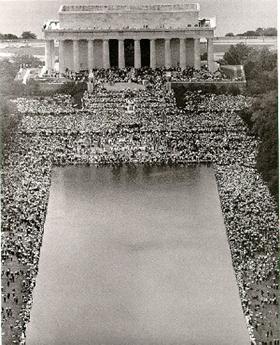
“I have a dream that my four children will one day live in a nation where they will not be judged by the color of their skin but by the content of their character.” – Martin Luther King, Jr.

Well, it was a nice dream while it lasted. Back here in Awake Land, I wish I could just love people for who they are, and the color of their skin wasn’t thrust upon me when I wasn’t worried about it to begin with. A confluence of events have made me realize that the issue of race is still volatile in America for all the wrong reasons, and perpetuated by those who are hurt most by it remaining volatile.

First, there was an anchorwoman for Channel 2 in Chicago who accused a reputable contracting company for doing “shoddy” work, simply because she was black. There is no proof that the contractors are racist; it is an accusation that was made because it can be. It’s not the first time this reporter has made such accusations, and given her high-profile persona, it strikes me as highly irresponsible if no proof can be offered. The real damage of these sorts of accusations are twofold: it forces us to look at people only by the color of their skin, and because these character assaults require no proof, the reputation of the contractor is instantly stained through no fault of his own.

Second is the continued immigration rallies, which I understand aren’t supposed to be about race as such, but the issue bubbles just beneath the situation. Unlike the crystal clear race issues of the 1960’s Civil Rights Movement, the immigration debate isn’t about race. But for those who don’t support the marcher’s political aims, it has been hard to distinguish their political goals from their ethnicity. And to those who oppose the political objectives of the marchers, the ethnicity of the marchers is of no consequence; but it seems that we can no longer ignore it.

The hoisting of Mexican flags is a right I grant to them all, but it focuses the attention to be on cultural and ethnic divisions as much if not more than political goals of the marchers. So honest debate about serious immigration issues is tarnished from the beginning, because the compulsion by the marchers to force outsiders to see them for their ethnicity as much as their policy needs has made a colorblind debate all but impossible. It has forced those who oppose illegal immigration to sound as though they are opposed to Mexicans or South Americans (or any ethnicity marching for that matter) more than policy changes. This is simply not the case, and it could set the stage for future unrest.

And then there is, of course, New Orleans mayor Ray Nagin, whose “chocolate city” quip single-handedly made an entire speech (and an entire agenda) about solely the color of someone’s skin, not the content of their character. Far be it from him to encourage all qualified people to return to the port city to rebuild it! No, this was about race and nothing more. And what was the result? White backlash that is both unfortunate and preventable. Backlash in the form of bumper stickers, racial defensiveness, and resentment. Backlash that was encouraged by forcing people who are willing to ignore racial differences and get on with life.

And this purposefully race-filled rhetoric is still going on despite a middle class with more and more minorities participating in the growing economy. I guess my question is, what can I do to encourage people to stop forcing me to view them in a way I do not want to? I do not want to only view people by the color of their skin, so what can I do to end the rhetoric about race in America?

For now, I’m disappointed. I wish we could all, white, black, and brown could take Dr. King's advice.

Wednesday, May 03, 2006

Jane Jacobs and The Difficulty of City Planning

A major figure in the history of urban planning passed away last week, one who single-handedly challenged and brought down the orthodoxy of her day. Jane Jacobs, who rose to fame with her 1961 book The Death and Life of Great American Cities, unflinchingly pointed to the mistaken assumptions that led designers to create dreadful crime-ridden super-blocks under the rubric “urban renewal”. In our current obsession to preserve as much historic urban fabric as possible, even to re-create it from scratch in some places, it is difficult to understand that throughout most of the twentieth, improving a city meant to demolish the old and replace with newer, supposedly more enlightened, public projects. Le Corbusier was among the biggest champions of such a view, and is frequently cited as the guiding influence for numerous faceless modernist urban blocks throughout the world. Nowadays, to improve the city is to restore the elements that once made urban life enjoyable, emphasizing sidewalks, mixed-uses and preserving the character of old neighborhoods.

Such a changed consensus on planning is largely due to Jacobs’ firm stance, who as an outsider to architectural planning circles and no academic herself. She steadfastly took apart principles that guided the practice of urban design since the late nineteenth century while proposing more workable solutions without even needing to graphically illustrate them. This was contrary to the traditional evolution of architecture, which consisted usually a graphic proposal followed by a graphic response. This explains why pattern books and monographs were crucial in the popularization of new styles of architecture. Part of the reason Le Corbusier’s ideas for the “Radiant City” were so popular was due to his clean and dream-like renderings. Jacobs did not respond by proposing a new architectural order, but by teaching us to think about urban problems as they actually to happen, not as the result of some abstract excuse like ‘poverty’ or ‘discrimination’.

And that is actually one of the most striking things about Jacobs’ book: she refutes the planners--a group that communicates strictly in forms and patterns--by using her knowledge sociology and daily human interactions without ever discussing in terms of architectural form or styles. She reveals a common flaw among all designers of habitable environment: that often they are driven by notions of how things ‘should’ work rather than finding how things actually work. A designer will claim that by putting a park here, a shopping strip there, and so much housing nearby, that an area will be filled with joyous crowds and that the neighborhood will rejuvenate by virtue of thoughtful design. After all, a drawn plan is essentially graphic depiction of how an organization of spaces ‘should’ work. The problem with this approach to solving urban problems is that it simplifies the way humans interact with their environment and with each other.

There are countless reasons why people do the things they do, many on a purely irrational basis. Dallas’s West End features charming historic architecture, manicured pedestrian zones, excellent public transit access, and a historic museum that draws many tourists. And still on any given day, you will find many times more people inside a gargantuan blue and yellow box surrounded by a sea of parking next to an unfinished highway. Why would they rather be in the latter situation? Because people have developed an inexplicable, and thus irrational, loyalty to the IKEA brand. A designer can only at best guess where people are likely to congregate, but much of the success of a development relies on understanding the reality beyond the drawings. The nature of particular businesses, the habits of certain social classes, and the informal systems of ensuring security and social trust will be more critical to the success of creating lively public spaces than the design. Still, Jacobs understand that design matters in facilitating the social mechanisms needed for success. Rather than being prescriptive, she favors restrictions on certain architectural tendencies that destroy fundamental human relationships.

Other writers have labeled Jane Jacobs as a libertarian, and I can see why that is so. If one reads libertarian publications, particularly like Reason Magazine, you will find that much of their writing focuses on issues at a very intimate yet practical level. Jacobs, who based all of her research on her own personal observations and conversations with others (she rarely cites any outside sources), is able to present a mundane yet revealing perspective on the various ways people behave and relate. Libertarians often propose original solutions to problems by discarding idealistic values in favor purely pragmatic ones. Their beliefs on general philosophy and political theory are simple and consistent, which allows them complete freedom to consider alternatives that may upset most people’s moral instincts. Whether it is the complete legalization of drugs to the dismantling of the welfare state, libertarians are not afraid to question and propose our most cherished assumptions about how to improve our lives. Jacobs ascribes no intrinsic value to open space and parks, since they are dependent on surrounding social factors. And she definitely ascribes little value building as a way to solve social problems, similar to the closely held libertarian belief that it is futile to throw more money at a problem if its diagnosis is flawed.

Jacobs’ main contribution to urban studies is the realization that cities are more about the people that populate the city than it is about its physical forms and structures. They are a dynamic confluence of culture, commerce, leisure and individuals making countless decisions that affect how urban spaces are inhabited. It’s a messier state of affairs than what an elegant master-plan describes, and often the outcomes of what happens to an area has more to do with factors outside the realm of design, such as poor law-enforcement, the macro-economic context or punitive taxation. With all these considerations, it’s no wonder that the practice of urban design could be considered too confined by abstraction. One studio I took at school entailed the master-planning of an existing European city. The recommended strategy at the time was to map prevailing existing patterns found in the surrounding urban fabric, to overlap these patterns on top of each other in order to ascertain evident graphical densities that would influence new urban forms. This process was fun and fascinating, but it was all so abstract that it instilled a feeling of uneasiness in me when thinking about how the actual inhabitants would perceive my ambitious construct. To defend my scheme, I came up with all sorts of rationalizations of why I zoned particular functions in certain areas and why it was a good idea to put a park that space but not in that one. In the end it was a lot of wishful thinking, but the renderings were seductive enough to receive favorable reviews.

Still planning is a noble pursuit, since a certain amount of visual consistency and order gives a city a useful legibility that makes its inhabitants comfortable. And despite the relative dearth of information an urban master-plan provides compared to the reams of construction documents for single buildings, urban design is considerable intellectual undertaking. It isn’t enough to follow rules of thumb in design, which are often abstract tools. It also requires a deeper understanding what people are really like.

Lack of Geographical Knowledge and Low Support for War No Coincidence


I am neither a political scientist nor a geographer, so I am perfectly qualified to link the following recent news: publicly educated children can’t find Iraq or Afghanistan on a map, and support for the war in Iraq is waning. Hmmm, see the connection? Even a layman like myself can see by only reading the highlights of Mahmoud Ahmadinejad’s comments that surrounding Iran with democracies is a good thing. Could anyone possibly doubt that Iran having nuclear weapons is the biggest possible danger the world faces, given its President’s recent comments, its lack of moral constraints, and its sponsorship of international terrorism?

Since the best reasons for the War on Terror have always been to de-stablize the region (yes, this is a good thing when madmen have control over millions), promote democracy in a theocratic world, and discourage Iranian fanaticism, the war is not without solid logical foundations, though war is never a qualitatively good thing by any measure. These foundations bear themselves out clearly when one knows the simple geography of the region: Iraq on the west of Iran, Afghanistan on the east.

If it is true that Iran has been a ticking time bomb for every administration since Carter’s, every president has likely been waiting for the opportunity and the justification to invade Iraq and Afghanistan, if for no other reason, to surround Iran. Forget “blood for oil,” WMDs, or even the truly good reasons to invade both struggling countries. Geography is enough justification as far as I’m concerned, given that Iran is the gravest threat out there, and 9/11 provided all the justification we needed to establish bases around Iran.

So why is support for the War on Terror waning? Well, it seems most American children, and I would imagine even more of their parents (since they haven’t even been to school in 2 decades) don’t understand that Iran is surrounded by Iraq and Afghanistan! If they don’t even know where these countries are, how they understand the very basic strategic advantage of having Iran surrounded?

In the clearest English I can muster, suppose you’re a psychic police captain, and you know at 4:00 today a bank will be robbed by a madman with a gun, who will kill every teller and customer without hesitation. Would you rather have the place surrounded by 3:00, or wait until the alarm sounds from the bank after everyone is already dead to respond? Of course, you (being the savvy police captain that you are) want to have the place surrounded clearly and loudly, so that the madman will never rob the bank to begin with, or if he does, he will be quickly overwhelmed. Iran is the bank robber, America is the police captain, and it doesn’t take a psychic to know that Ahmadinejad is spoiling to kill as many Israelites and Israelite sympathizers he can find. If we had moderate geography skills, this would be as plain to us as killing Jews is to Iran’s president, and support for the War on Terror would undoubtedly be higher.

Friday, April 28, 2006

Brad Pitt and Ayn Rand Make Strange Bedfellows


A recent article from Variety suggests that Angelina Jolie and Brad Pitt might team up to finally get “Atlas Shrugged” on film. I wonder if Ayn Rand would shrug or roll over in her grave at these casting choices. It strikes me that “Atlas Shrugged” may have become too popular for its own good, loved by people who probably have never read it (Mark Twain’s description of a great book) and name-dropped to imply a certain enlightened sophistication and post-modern sensibility. When definitive moochers and non-producers like Jolie and Pitt can claim to be Randian objectivists, I wonder if her points are fading and her ideas becoming less clear over time.

I know, I know, in a capitalistic system, heartthrobs like Jolie and Pitt are merely getting paid what the market will bear for their services. Maybe they’re not Captains of Industry and maybe they don’t have the next great invention that will change the way we use the world’s natural resources. But they’re good-looking, very talented and if the market says they’re worth $20 million/picture, then they’re worth it. It doesn’t make them any less of a producer than the Carnegies and Fords of the world.

Except, of course, it does. Jolie was born into the business (her father is Jon Voigt) and we all know if not for his boyish good looks, Pitt would have never made it as far as he did. He is talented, and I don’t doubt very intelligent. (At least he’s playing John Galt, who I never really liked. Please, Mr. Director, get Russell Crowe for Hank Reardon.) But these aren’t the sort of people that come to mind when I think of the word, “producer.” To me, they are the essence of the word “moocher.” They don’t create anything, they don’t offer the world great solutions to modern problems. If either one of them was a true libertarian, I might sympathize. But while I can’t speak for Jolie’s politics, I remember Pitt giving speeches on behalf of John Kerry (D-Mass) at the University of Missouri in 2004. Yeah, like college students need pep talks to be more liberal.

Regardless, that they are so interested in objectivism and “Atlas Shrugged” just strikes me as superficial. Why can’t celebrities just do what they’re best at? Act in average movies, be eye candy, and let us fantasize from time to time how great it must be to be them. That’s it. That’s all we need from them. You don’t have to pretend to be some intellectual or to be well read. You don’t have to look down from above as though you single-handedly have the answers to all the world’s problems. I applaud you for your adoptions and efforts to help those less fortunate, but name-dropping Ayn Rand when you petition for John Kerry is like name-dropping Pope Benedict XVI at a Dan Brown book signing.

My own feelings on Ayn Rand are mixed. I love that she was able to portray so clearly the distinction between producers and moochers, and define what makes capitalism a moral economic system. I love her epic backdrops, her enormous settings that make “Atlas Shrugged” explode off the page, and give it a feeling of immense importance. I love that she has the ability to pinpoint very subtle behaviors and sayings that moochers have and use, that she is able to write a novel that makes a philosophical argument convincingly and unashamedly.

Of course, from my religious point of view, I find it lacking, a critique Rand couldn’t have cared less about. Her idea of the superman is grossly immoral and a breaking of the first and only commandment, to love God above all things, including ourselves. I find it irritating that she lumps all religious leaders into the category of mystics, and doesn’t recognize the contributions religion has made to free societies, only their detriments (which I agree are numerous). Her take on capitalism, though dead-on in the world of economics, is not sufficient to build a philosophy around. Any philosophy that points back to the human person is the equivalent of a dog chasing after its own tail.

But even though I have my issues with Rand, “Atlas Shrugged” (and I realize I’m name-dropping!) was a formative book for my understandings of capitalism, and hence conservatism. In its own way, it helped me to appreciate the Fall, to define greed, and to immediately recognize the language of hateful, bitter and resentful people. And like everyone who reads the book, I feel like I have a little stake in its future. So Brad and Angelina, please, stick to your silly “Mr. and Mrs. Smith” picture shows and leave the real art to real artists.

Monday, April 24, 2006

The Not-so-Conservative Conservatives


If and when Republicans lose in the November elections, it won’t be because the nation has in any way turned liberal, but because it has become too conservative for the blowhards in Washington. Americans in all those red counties (parishes in my home state of Louisiana) are tired of compromises with socialists on issues like immigration, government spending, making the tax cuts permanent, and education. Not every American minds these compromises, of course, but clearly enough to get W re-elected by 4 million votes. When we see his poll numbers go down, it doesn’t seem that it’s because the nation is becoming more liberal, but that he has acted too liberal for a conservative nation. His poll numbers are down because conservatives don’t think he’s conservative enough, not because there are all of a sudden more leftists in America.

I can hear the ribbing I will get from the liberals that envelope me at my institution of higher learning. From what I can determine, at least 90% of faculty, staff and students at my school are not only liberal, but examples of classic, 60s-style civil rights liberal. Which is their right, of course. It’s just that I find this sort of nostalgia about the past harmful, and constantly in need of new victims instead of making way for truly progressive ideas. So these liberals will love to use Republican losses (or sagging poll numbers if Republicans win again) as proof that the nation has finally turned against Bush, against conservatives and have embraced Democratic party and their liberal ways. But it seems the Dems are a party that is in such tatters, one would have to be truly delusional to believe such a change took place in the populace.

My own thinking leads me to believe that America is not any more socialist now than ever, but more conservative than ever. This future optimism by lefties is a gross misreading of American culture, past, present and future. While I have been snickered at for having the audacity to tout the “rugged individual” image as part of what defines American culture, I very much believe it still to be the case. But instead of lumberjacks and gold miners coming to mind, the new “rugged individual” owns his own business, works from home, and pays other people to do his work for him.

His individuality comes more in his ideas and entrepreneurial spirit than his rugged five o’clock shadow. Those who work for big corporations and even government bureaucracies rarely think of themselves as being cogs in the wheel, as the National Socialist Worker’s Party (Nazis) or the Marxists once wanted people to believe. (It is fascinating for me to hear of the rebellion taking place at my fiancĂ©e’s new corporate office, where everything from staplers to desk chairs are ordered to be congruous, and the effort to keep every cube identical is kept alive, one memo at a time.)

Americans know America when they see it. They accept that it is a melting pot, whereby various cultures were melted and formed into one, as much as a number of cultures can become one. But they know they didn’t lose their individuality, even as they became cultural Americans. And that sense of the individual, which I often lament as someone who works in the Church, feeds many of our political views, particularly on immigration, but also on taxation and education. So Bush, keep being a cowboy. And Congress, please do what you were elected to do: be conservative and protect the Constitution. If you lose in ‘06, it should be viewed as suicide, not homicide. Homicide happened to the Dems in 1994, when the nation became aware of its conservative culture, and then proceeded to vote on it.

Thursday, April 20, 2006

Mon Oncle: An Architecture Film

When it comes to movies that feature architecture as a major theme, the pickings are rather slim. Among only a handful of films that deal with architectural design in any meaningful depth, the best known and most accessible film was the film adaptation of Ayn Rand’s novel The Fountainhead. Even that movie is more about projecting a comprehensive philosophic viewpoint and milking the melodramatic values of the romance between the protagonist and his client than it is about a real debate about the design of buildings.

Instead, students in architecture are led by their teachers to discover films that make heavy use of sets, color and lighting but generally contain an esoterically boring script. Bladerunner, Brazil and almost any film by Peter Greenaway (The Cook, Thief, Wife and His Lover; Belly of an Architect), David Lynch (Blue Velvet) or Wim Wenders emphasize the setting to such a degree that it becomes a character in the film itself. Yet the effect these films have on the designer’s mind is instilling an appreciation of technique by realizing that crafting an environment a particular way can impact the viewer’s perception of reality.

Jacques Tati’s 1958 film Mon Oncle (My Uncle) continues the same pattern, but it distinguishes itself by presenting to the viewer the fundamental debate that confronted architecture of the time. If there is one film that crystallizes the conflict that dominated twentieth century discourse regarding modernization, Mon Oncle introduces this more lucidly than any other. The story is itself rather thin as its entertainment value lies more in a series of visual gags similar to the comedies of Charlie Chaplin in which the main character Monsieur Hulot never speaks (played by Tati, a former mime). Hulot is the uncle of his sister’s young son, whose father is an executive at the local plastic tubing factory. The family lives in a ridiculously modern home, with its absurdly minimalist garden, its fully automated fountain and a state-of-the-art kitchen. Much of the film consists of sequences that demonstrate how the family goes about it its daily routine by submitting to the demands of the house’s harsh design. Corbusier’s “Machine for Living In” becomes reality in the movie, in which the house forces its occupants to suppress the way people would normally live. The people become the props.

Monsieur Hulot lives in another part of town that is representative of the typical small French town, with its animated market square, its charming rustic facades and lively cast of characters that inhabit it. His apartment is on top of tall building composed of a mish-mash of different vernacular styles, accessed by a labyrinth of stairwells. The contrast between Monsieur Hulot’s old-fashioned neighborhood and his sister’s and brother in law’s clinically modern surroundings is deliberate. There is a recurring scene that marks Hulot’s transition from the old to the new part of town, which consists of him walking trough toppled portion of a ramshackle brick wall that frames a view of monotonous modernist housing towers in the distance. This short scene serves as powerful reminder of the ongoing destruction of the old urban fabric in favor of the brand new and alien presence of modern structures. Considering the time the movie was made, it was likely Tati’s way of critiquing the unstoppable trend of ‘urban renewal’ common in his day. Monsieur Hulot serves as Tati’s hapless warrior against modernity, accidentally bungling and ruining some aspect modern convenience, whether it’s at his brother in law’s plastics factory or at the automated appliances of his sister’s home.

Since the Mon Oncle is mostly a series of choreographed comedic sketches, Tati’s argument against the ravages of modernism does not rest on tragedy but rather on light-hearted silliness. Yet this absurdity had very serious message which makes the film’s conclusion ironically tragic, even if it doesn’t come off that way. The charming melodic theme that recurs constantly throughout the film give an inconsequential air about the events within the film, but there is a sense of melancholy in the tune that triggers as sense of loss. It’s a nostalgic theme, a response we have when realized that we have lost something only when there is none of it left. Tati uses nostalgia in describing the old town to a level exaggeration equal to the way the he caricatures ultra-modern life. The depiction of the bustling market square is almost too perfect, and is as much divorced from the actual reality of such a place as his depiction of the machine house governing every aspect of the life of the family. My own observation is that nostalgia for the past can be just as deceptive in solving current problems as an un-tempered confidence in modern solutions. Still, Tati makes a compelling case for the preservation of the traditional life, and his attitude towards modernity is a sentiment shared by most people today. It should be mentioned that this film preceded by several years the first major campaigns against ‘urban renewal’ and provides basis on which much of post-modern architecture theory would based.

There’s plenty in this film for architecture students to study beyond its philosophical point. There was evidently much attention to the details of the sets used, stylistic cues in the architecture, and even the use of techni-color to emphasize the contrast between the ‘natural’ colors old world the artificial tones of the new. Mr. Hulot’s building is a weird post-modernist dream, while his sister’s house reminds students the contradiction of designing a house where inside and outside are one and using an electric gate to imprison visitors within.

In all Tati is to be recommended in bringing to the fore the affect architecture has on people while still instilling humor to make it accessible to the public at large. Although the film is nearly fifty years old, the contentions on modernity and our architectural environment are extremely relevant for situations in our own day.

Tuesday, April 18, 2006

The Gift of Heresy: What Western Culture Lost in the Reformation


There were so many lasting effects of the Reformation on Western Civilization, it is no wonder more has been written about Martin Luther than any man except Jesus. Economic, cultural, philosophical and, of course, ecclesial changes swept Europe and were eventually shipped to America. The “Protestant work ethic,” anti-Catholic sentiment and distrust of authority were offshoots of Luther’s originally ideological disagreement over justification with the Roman Catholic Church, and these fiercely independent characteristics are part of what define America. No doubt the Catholic Church was ripe for Reformation; it had been corrupt for centuries, practicing simony, the selling of indulgences, and confusing church and state as freely as any theocracy might.

But at least a little, if not a lot, was lost in the Reformation. Non-Catholic Christians, like myself, lost the ability to claim there was one true church in the literal sense; even though we confess in one “holy catholic and apostolic church.” I assume this means one spiritual church, not one physical one. I have no problem confessing this, but it’s a shame we can’t literally be one, and only one church. We also lost common understandings of the sacraments, and how to achieve salvation. But maybe worst of all, Protestants effectively lost the gift of heresy, the ability to rightly accuse a heretic of false or perverted teachings. Losing an understanding of heresy may have had a further-reaching impact on western civilization than any other consequence of the Reformation.

Let’s quickly define heresy. Here’s a definition I found that sounds about right: “Doctrine which is erroneous in such a way that Christians must divide themselves as a church from all who teach or accept it; those adhering to heresy are assumed to be lost, although Christians are unable to make definitive judgments on this matter. The opposite of orthodoxy.” Far from the stereotypes of the Church calling anyone and everyone heretics as during the Spanish Inquisition, the Church successfully defended right thinking of the faith for many centuries, usually democratically and nonviolently. These half-truths (as all heresy is in some part truth) were debated, voted down and decided they could not be tolerated for the GOOD of the faithful. After all, salvation was on the line.

But after the Reformation, what institution would Lutherans turn to for a definition of orthodoxy? Worse, just as an example, who do the literally tens of thousands of Pentecostal denominations turn to do today to define what is heresy and what is not? At least Lutherans didn’t fall far from the tree. But today’s Protestants are a whole different fruit, whose doctrinal gears are so stripped they can scarcely determine the difference between historic heresy and historic doctrine.

More practically, and, in a sense, more importantly, western culture lost over time the ability to call any moral behavior heretical, not just bad religious thinking. Of course, we wouldn’t use the word “heretical;” we would call it “immoral,” or “wrong,” or even just plain old “bad.” But we would call it something, and it might even be bad enough that we would willingly separate ourselves from it, by ostracization or even shunning. The Amish understand this, as did the ancient Greeks and many African tribes continue to practice shunning as a way of discipline. I’m not saying we need to adopt those discipline techniques per se, but we shouldn’t dismiss all discipline so quickly either. Guilt plays an integral part in our moral development, and as we have lost the ability to call immoral behavior “heretical,” guilt been put on a back burner so far away, it is hardly in reach of the pilot light anymore.

What else would make teenage girls go on “The Today Show” (with that hardest-of-hitting journalist Katie Couric) and brag (at worst) or feel no remorse (at best) for smoking marijuana, performing oral sex and binge drinking at the ages of 14 and 15? To these girls, their behavior wasn’t wrong. They were behaviors everyone does at some point, just good learning experiences. Or what about the regularity of soft porn or hard porn images in cultural life? No heresy here! Just a moral preference, no more right or wrong than any other!

Is this the result of losing the ability to call heresy what it is? Perhaps my thesis is too far-reaching. Perhaps there is no connection between the historical breaking away from the Catholic Church and western culture’s descent into excused immorality. But something happened. Something has allowed our present culture to feel no remorse for wrong behavior, and something has prevented our present culture for calling wrong behavior wrong. We mocked those who called heretics “heretics” for so long that we have prevented ourselves from using such accurate labels. Goodbye truth, hello disorder, until we reclaim the authority to speak the truth in love for the GOOD of ourselves. Persecuting heresy, whether ecclesial or cultural, is a blessed enterprise if done out of love.

Friday, April 14, 2006

Academia and Faith: Are They Compatible?


During a recent pre-marital counseling session, my pastor used Genesis 2 and 3 to speak about what marriage was, how it was established, and what made marriages healthy or unhealthy. The discussion took me back about two years to a class at my seminary that focused on Genesis, where we discussed the nature of the serpent, whether the Fall was a reality, and who was really being honest in that garden of lore. At the time, my professor posited the idea that the serpent was the truth-teller in the Garden and God was the liar, and this has led me to wonder if academia and faith are at all compatible.

Before creating Eve, God instructed Adam not to eat of the tree of the knowledge of good and evil, “for in the day that you eat of it you shall die” (2:17). According to my professor, when the serpent told Eve that she would not die if she ate from this tree, it was, in fact, telling the truth. This was attested to by the fact that neither Adam nor Eve died immediately after eating this fruit. So it was God who had told the lie, God who had tricked Adam, God who was seemingly using these puppets he created as a kind of social experiment, and little else. The real truth lay, according to my professor, with the serpent. Looking over my notes from the class, my exact comments were, “The snake was right; they did not die, but they did get knowledge of good and evil”.

Looking back, I’m ashamed I took all this in at face value. But if this bit of scripture is taken literally and believed to be inerrant, I can see how this conclusion was reached. Adam and Eve did not die immediately. But is this what Christians believe about the events in the Garden of Eden, that God was the liar and the serpent the beacon of truth? No, we do not, and the Church has never held this to be the case. In fact, this act of disobedience by Adam and Eve did bring death into the world. Adam and Eve didn’t die immediately, but they would no longer escape death altogether. According to Richard Marius, a not-so-sympathetic biographer of Luther, Luther saw Adam as created immortal, “but God imposed death on Adam for sin, and death is carried on in the original sin that exists in procreation and the concupiscence that inevitably goes with sexual intercourse” (Martin Luther, 65). Lutheran theology and Catholic theology before it understood the serpent to be the deceiver, when he said the fruit would not introduce death when, of course, it did.

So why teach that the serpent was doing Adam and Eve some sort of favor by letting them in on the truth? Was this just an attempt to challenge students so that they may come to their own theological conclusions about the Fall? I wonder if pressures in the academic world force us to constantly seek new interpretations when, in fact, no new interpretations are needed? Must we search for new clues into what scripture is trying to say at the cost of saying something contrary to the nature of God? And what is more contrary to our understanding of God’s grace than the thought that God lies to us, tries to deceive us, and the real advocate for honesty in the Garden of Eden was the serpent? Does no one else see this as getting it all backwards?

Sometimes I wonder about the historical-critical and/or academic approach used in the vast majority of seminaries. I am not opposed to rigorous, serious and academic study of scripture; I understand there must be a balance between piety and technique. But I am opposed to teaching that plants seeds of distrust. Doubt is more understandable, even organic to our faith. Distrust strikes me as more dangerous. It is time to bring attention to the fact that if we are not careful in our interpretation of scripture, we may end up committing a grave sin: calling God a liar.

Wednesday, April 12, 2006

The Luckiest Generation: Why the French Can't Quit Socialism

As I observe the recent French riots and their success in defeating a new employment law, I can’t help but think what I would have done had my family decided to stay in France rather than leave for the U.S. I immigrated to America from France when I was several years into elementary school, too young to realize that the move was final and that my future lay in my new country. There was always the option of finding my way back to France, and I still maintain privileges of French citizenship. As a young family man with a career in Texas, it’s clear that I have made no attempts to re-establish myself in the “hexagone” (the shape of the French mainland). This has been the case with my other numerous siblings, even with one of them obtaining a masters degree from an elite French University (ESSEC) only to find himself working the U.K. and now in Putin’s Russia.

The barrier of entry to the world of decently paying work in France is extremely high. It’s almost impossible for any trained professional from outside the country to make a living, but it’s getting just as difficult for native French citizens. I have numerous French cousins close to my age who have yet to secure any kind of stable employment, floating from one low-paid (or un-paid) internship to the next, or going back to school to obtain another little degree in the hope of finding something. My parents and siblings constantly offer to help my French cousins by sponsoring them to live and work in the U.S. There are dozens of French multinationals with headquarter offices in Dallas/Fort Worth, and enrolling at the local university isn’t at all that difficult. You would think that my French cousins would jump at the opportunity to reinvent themselves in a place that allows individuals to achieve their full potential while benefiting from the support of their Francophone relatives. So far, there have been no takers, and family gossip from France continues to entail stories of temporary internships, new job-training programs, or unemployment. And if it’s not from my relatives, from time to time my father will receive formal letters of consideration from alumni from his elite alma mater (HEC) on behalf of their children still seeking employment or even an internship wherever they can.

Actually, such letters of consideration point to a primary way in gaining access to secure employment in France. It seems that parents have an important responsibility in creating and maintaining as many connections as possible, whether through their profession or their active involvement in civic associations. Some of my cousins have done quite well, either by completing studies in the most competitive schools or by having their parents vouch for them. Without that advantage, strangers are met with skepticism by prospective employers. Still most have average degrees from average French Universities, with parents working at state-run enterprises that are already saturated with liabilities that make them averse to hiring.

This is similar to the situation found in many rust-belt areas here in the U.S. Although the decline of manufacturing doesn’t get near the amount of government assistance as it does in France, they prospered during a time where labor was in high demand, markets were less competitive, and benefits to employees seemed to expand as far the eyes could see. This golden era of lifetime and intergenerational employment in one company that sustained large middle class communities took place in the three decades following the Second World War, similar to what was going on in France during the “Trente Glorieuses”, the roughly thirty-year span of rapid economic growth the defeat of the Nazis. The bottom fell out in the U.S. during the 1970’s only to be dealt with with uninspired political leadership that hoped that price controls and mounting regulations would be adequate panaceas. The 1980’s was the equivalent in France, and the voters had put their faith in socialist president Francois Mitterand who in turn did everything to make it even harder on the French by aggressively nationalizing many of his country’s biggest companies.

What sets the general economic course of the two countries apart is the emergence in America of a political force that is protective of capitalistic development over all else. This policy was embodied by Reagan, and in Britain by Thatcher, and prosperity and growth trumped over any concerns of deep structural changes in the economy that disrupted the happy employment stability of our manufacturing sector. France is to have never had the opportunity (nor the interest) of choosing a Reagan equivalent, settling instead with the uninspired careerist Jacques Chiraq. The high level of ‘structural un-employment’ has stayed pretty constant in France for the last generation, and there is currently no serious or creative discussion on how increase employment. The pro-market voice in political affairs, a given in our country, is considered a fringe opinion more unusual to hear than the shallow theories of Jean-Marie Le Pen. When debating joblessness, the discussion seems to be about how to tweak the existing system, either by forcing early retirement, expanding the state payroll or deporting foreigners to make room for those who won’t work such jobs.

Why is radical economic liberalization of an obviously sclerotic system not considered worthwhile in re-invigorating France? Beyond the common observation that welfare states tend to grow over time and citizens desire more assistance from the state for an ever-growing number of reasons, there is an almost deeper psychological explanation: the post-war economic boom in the West was less the status quo in the natural evolution of economies than it was a fortunate anomaly. High birthrates, large un-tapped markets with few countries able to supply them, and dormant populous countries undergoing their socialist experiments (e.g. India and China) permitted large swaths of relatively unskilled workers to acquire generous livelihoods. Compared to all the other workers who obtained advance degrees and working very hard for half the wage an average assembly line worker at an automobile plant, the latter has hit the jackpot. For those who are not driven to improve, acquire more responsibility and become more versatile in their jobs, the terms that some manufacturing workers enjoy is as good as it gets.

While this ideal state of affairs only affects a dwindling minority of American workers, such a deal exists for almost all French workers. Job tenure, generous unemployment benefits and the disincentive to perform well is as good as it can get, and has unsurprisingly become a fundamental human right. What the French fail to understand is that these so-called rights are mostly based on the most fortunate and unusual economic occurrences after the War which makes it therefore inherently unsustainable. For the French socio-economic system to continue to thrive would require high birthrates, less international competition, a dynamic job-market and continued military support from an outside power (the U.S.). Only the last factor has actually held, while the first three have not come to pass. But that obviously doesn’t stop the French youth from believing that one day soon they too will enjoy the benefits of their system. They await the next jackpot where all the stars align in their favor.

I find that a high dependence on a generous social welfare system is a lot like a gambling addiction. You could lose everything and still be convinced that the jackpot follows after the next pull of the lever. France has lost its international prestige, its competitiveness and many of its people have lost hope, not to mention its ability to work. But the recent demonstrations are evidence that the French youth are still willing to pull the lever for the chance to win it all.

My question then becomes: When you’ve finally set yourself up for lifetime employment, are you excited about the future, about all the things that could be but never will because of the permanence of your position? What can you look forward to?

Tuesday, April 11, 2006

Franceland: My Dreams and Reality

Just a day ago, Jonah Goldberg summarized what I think of the land of my birth these days:

“…Write the place off. Put a wall around the nice bits and call it Franceland. The tourists will love the quaint historical re-enactments.”

Unlike other French émigrés who consciously made the decision to leave their home country in search of better opportunities, I came to the U.S. as a child not knowing much about what I was leaving behind. From my point of view at the time, France seemed like a swell place, with beautiful streetscapes and rural landscapes (we lived in Provence), aromatic outdoor markets with its amazing produce. Compared to what I would later encounter in the public schools in the U.S, elementary school in France was a pretty serious place, and I feared constant belittling from my teachers. The principle of self-esteem was non-existent in the French educational system, and teachers did not hesitate to humiliate you in front of everybody by discussing your results on a test or the failure to organize your notebook neatly. As a kid I loved France but I was not terribly confident of myself.

Moving to the U.S., I was quick to compare and judge my new environment quite negatively. Mid-sized southern cities seemed to have a whole host of problems, with their distant spaces and tacky streetscapes, steril supermarkets and schools that seemed to be more about having a fun time rather than evading the teacher’s scorn as I had been accustomed to until then (this was a good thing, as it was a big boost to my self-confidance) . And even at a young age, it wasn’t unusual to be aware of France’s rich cultural heritage. This consciousness colored my first impressions of America, perceiving it as culturally vapid, anti-intellectual, and overall kind of ‘fake’. In other words my attitudes as a child was not much different from many grown-ups who have some sort of beef against America, and who tend to idealize a more glorious reality in the land flowing with wine, cheese, and ‘joie de vivre’.

As an adult, I have settled in the U.S. without giving much thought to going back to France. After witnessing millions of young French people taking to the streets to maintain stasis over much needed change, I have no regrets of not having made a life there. Still, I would like to acquire a nice piece property there, perhaps some rural manor in which to spend some of my retirement. I’ve learned over time that France is still a wonderful place as long as you are not engaged in the reality of making a living there. Upward mobility is extremely limited, and the current social system actually ends up favoring the privileged classes over those at the bottom. If you are a person of privilege, in which you have parents in important positions in a major bureaucracy or industrial concern, chances are that you will do reasonably well in France. Without this advantage, your best bet is to compete against all others in highly selective national exams that determine who gets to go the country’s elite graduate institutions. There are no second acts in French professional life, and in many ways you have only one shot to succeed. Screw up that chance and you find yourself either unemployed or floating from one unpaid internship to the next for several years before hitting the jackpot by securing a tenured job for life.

Apparently that latter prize is worth everything to most of the French. Freedom from risk, uncertainty, and opportunity is the French person’s most treasured value. The stigma against unemployment is not that negative compared to the way Americans see it, so it has become socially acceptable to mill around at the expense of taxpayers for quite a long time before finding something secure.

My most treasured value as a Franco-American is freedom from stasis, from predictability and determinism. These values will hopefully allow me to enjoy France from a position of extreme privilege, where I can afford anything I need without having to worry about how to pay for anything. Provincial France is emptying out quite rapidly as the young move to Paris to find work, so there’s lots of idyllic historic properties waiting to be restored. I hope to enjoy ‘Franceland’ in the future but I wonder if it will become an even more unrecognizable place in thirty years from what I remember as a child.

Monday, April 10, 2006

Walls, Welfare and Illegal Immigration


The subsequent debate over how to “solve” illegal immigration has brought the idea of a border wall to the forefront. This is seen by some as not only a good idea but an absolutely necessary one, an idea whose proponents have given up caring how politically correct or compassionate they (don’t) sound when proposing it. “Good fences make good neighbors” is an adage political conservatives have adopted for this current debate, and history seems to be on their side.

The Roman Empire learned the hard way to build walls. After being sacked in 390 BC by the Celts, Rome built an enormous wall, 24 feet high by 10ft thick. Rome wasn’t sacked again for almost a millennium, in 476. Now, I know some love to compare American “imperialism” with the Roman Empire, and I’m no apologist for Rome. Certainly, many of their campaigns were aggressive acts of empire building. But not all of them; the empire was attacked regularly by the barbarian Gauls, Hannibal, and the Parthians. As Rome won these battles, it acquired more and more territory, but part of what led to its downfall was a confusion of its borders. Only half of 1% of its citizens were in the army, and this made their borders unenforceable. The empire collapsed when its walls were no longer effective, either because invaders had learned ways through the city walls, or because the empire’s invisible borders had become too porous.

Ironically, while the Empire ruled, a great amount of peace was achieved. Before the empire, most of the world knew bloodshed and tribal division. But under Roman rule, “Pax Romana” was a reality for millions. To be sure, there were costs to empirical rule, but many of the subjects found that they lived in peace, with a common language, leader and rule of law. Today, we would not consider this to be an acceptable way of life; every ethnicity and culture has a built-in desire for self-governance since democracy has proven to be a success in so many parts of the world. But at the time, the walls that defined Rome and the empire were crucial for its society to survive. Only when those walls were torn down did Europe decay into the Dark Ages.

For Israel and Palestine, a wall seems to have worked remarkably well. Of course, many groups condemn the wall, comparing it to the Berlin Wall and see it as a sign of anti-humanitarianism. But like the Roman walls, this wall keeps people out more than it keeps them in, so it is a wonderfully humanitarian wall for the people of Israel. (For reasons unfathomable to me, many Christians lament the wall, apparently forgetting the horrors of the Holocaust and the need for a Jewish state. Most Mainline Protestant official bodies regard Israel and America as evil centerpieces of aggression, not North Korea, Iran, China, the Taliban’s Afghanistan or Saddam’s Iraq.) So walls indeed seem to make for more peaceable neighbors, and must be the first priority in America’s dealings with illegal immigration. It is more humane than having no physical wall, but enforcing legal ones later.

But part of the reason there has never been incentive to build a wall is that Americans seem not to mind giving some jobs away. It’s not that Americans won’t do the jobs that illegal immigrants do; it’s that they don’t have to. The problem of immigration is in large part a by-product of America’s wealth and the catatonic nature of the welfare state. When we pay people not to work, why should they? When a nation becomes too wealthy (defined as wealthy enough to pay people not to work), an economic vacuum is created. And who will fill it but those hungry to work in this wealthy country?

So it seems that part of what is needed for a nation to be sovereign (not necessarily politically but economically) is relative poverty. I wonder if a nation needs to be poor enough so that it appreciates work and does jobs some may consider undesirable? Economists recognize this when they speak of the desired rate of unemployment, which coincidentally is as statistically as low as it can possibly be. 4.7% unemployment is considered statistically full employment, so even with 4.7% of America unemployed, the economy has no room to employ them. The question is, will we lose enough wealth in time, and become so desperate that we will truly lament the loss of jobs to illegal immigrants?